
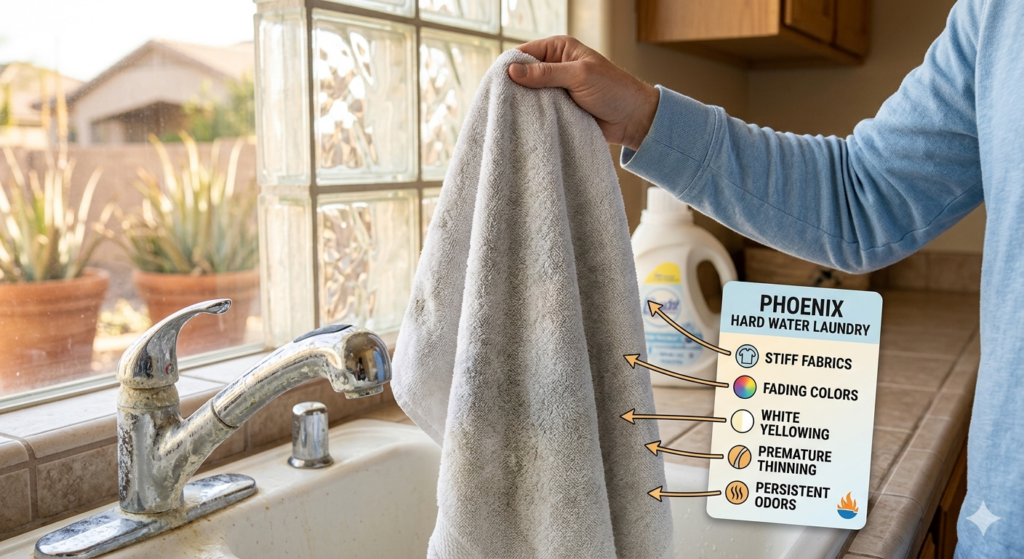
Is Phoenix Hard Water Ruining Your Clothes? 5 Warning Signs
If you live in the Phoenix metropolitan area, you are likely well aware of the white, crusty buildup on your showerheads and faucets. This is the result of Arizona having some of the “hardest” water in the United States. While most residents focus on the damage hard water does to their plumbing and appliances, many overlook the silent toll it takes on their most personal investment: their wardrobe and linens.
Phoenix water contains high concentrations of minerals, specifically calcium and magnesium. When these minerals meet your laundry detergent and high desert heat, they create a chemical reaction that is notoriously difficult to reverse.
Here are the five warning signs that the water in your Phoenix home is damaging your fabrics, and how professional intervention can save your clothes.
1. Towels and Bedding Feel Stiff or “Crunchy”
The most common complaint from residents in Mesa, Chandler, and Phoenix is that towels no longer feel plush after a few washes. Instead, they feel scratchy, stiff, or “crunchy” against the skin.
This happens because the minerals in the water don’t just stay in the liquid; they attach themselves to the fibers of the fabric. During the drying cycle—especially in the intense Arizona heat—these minerals crystallize and harden. Over time, this buildup creates a layer that prevents water from fully penetrating the fabric in future washes, making it nearly impossible to get them soft again with standard home equipment.
2. Whites Are Turning Yellow or Gray
If your crisp white work shirts or bed sheets are starting to look dingy, gray, or take on a yellowish hue, it isn’t necessarily because they are old. Hard water prevents laundry detergent from dissolving completely. Instead of creating a rich sudsy lather that lifts dirt, the minerals bond with the soap to create “curds” or soap scum.
This scum traps dirt and body oils against the fabric rather than washing them away. In a city like Phoenix, where sweat and dust are constant, this trapped debris quickly leads to permanent discoloration. Many homeowners try to fix this with more bleach, but the chlorine in bleach can actually react with certain minerals (like iron) found in Valley water, making the yellowing even worse.
3. Dark Colors Are Fading Rapidly
For professionals in Downtown Phoenix who rely on dark suits, black denim, or navy uniforms, hard water is a significant financial drain. The mineral deposits act like a mild abrasive—essentially sandpaper—on your clothes during the agitation cycle of a washing machine.
This physical abrasion breaks down the surface of the fibers, causing them to lose their ability to hold dye. If you notice that your black clothes are looking “ashy” or “frosted” after only a few months of use, the mineral content of your local water supply is the likely culprit.
4. Frequent “Mysterious” Holes and Fabric Thinning
Have you noticed small, unexplained holes in your cotton t-shirts or thinning patches on your favorite linens? Hard water makes fabric fibers brittle. As the minerals build up inside the weave of the fabric, the threads lose their flexibility.
When you wear the clothes or move around in bed, those brittle fibers snap instead of bending. This leads to premature thinning and “pilling.” For businesses that require high-durability linens, this can lead to massive replacement costs. This is why many local companies choose to outsource to a commercial laundry service that utilizes water-softening technology to preserve the integrity of their textiles.
5. Persistent Odors despite Being “Clean”
Because hard water prevents detergent from working effectively, it often fails to remove the deep-seated oils and bacteria that cause odors. This is a major issue for active residents who enjoy hiking Camelback Mountain or frequenting local gyms.
The minerals trap bacteria inside the fibers. When the clothes get warm again—such as when you start your morning commute or begin a workout—the odors are “reactivated.” If your clothes don’t smell truly fresh even right out of the dryer, your home washing process is likely being compromised by the water quality.
How Professional Care Solves the Hard Water Problem
The reality is that most residential water softeners in Arizona can struggle to keep up with the sheer volume of minerals in the municipal supply. To truly protect high-value items, professional-grade treatment is required.
Professional facilities use industrial water filtration and softening systems that remove 100% of the calcium and magnesium before the water ever touches your clothes. Furthermore, they use specialized detergents designed to “sequester” minerals, ensuring that no soap scum is left behind.
-
For Homeowners: Utilizing a wash and fold laundry service ensures your daily wardrobe stays soft and vibrant.
-
For Short-Term Rentals: An Airbnb laundry service is essential in Phoenix to ensure guests are greeted with soft, hotel-quality linens rather than “crunchy” towels that result from hard water.
-
For Restaurants: Using a tablecloth linen laundry service prevents the yellowing and graying that can make a dining room look unkempt.
-
For High-End Fashion: Certain items should never meet hard water at all. A professional dry cleaning service is the only way to ensure delicate fibers are cleaned without the risk of mineral abrasion.
Conclusion
You don’t have to accept that your clothes will have a short lifespan just because you live in the desert. By recognizing the signs of hard water damage early, you can take steps to protect your investment. Whether it’s your favorite pair of jeans or your business’s entire inventory of linens, professional care provides a level of protection that home machines simply cannot match in the Phoenix environment.
Stop letting Arizona’s water ruin your favorite outfits. Experience the difference of water-optimized cleaning with our wash and fold laundry service in Phoenix and enjoy the convenience of professional laundry pickup and delivery in Phoenix.